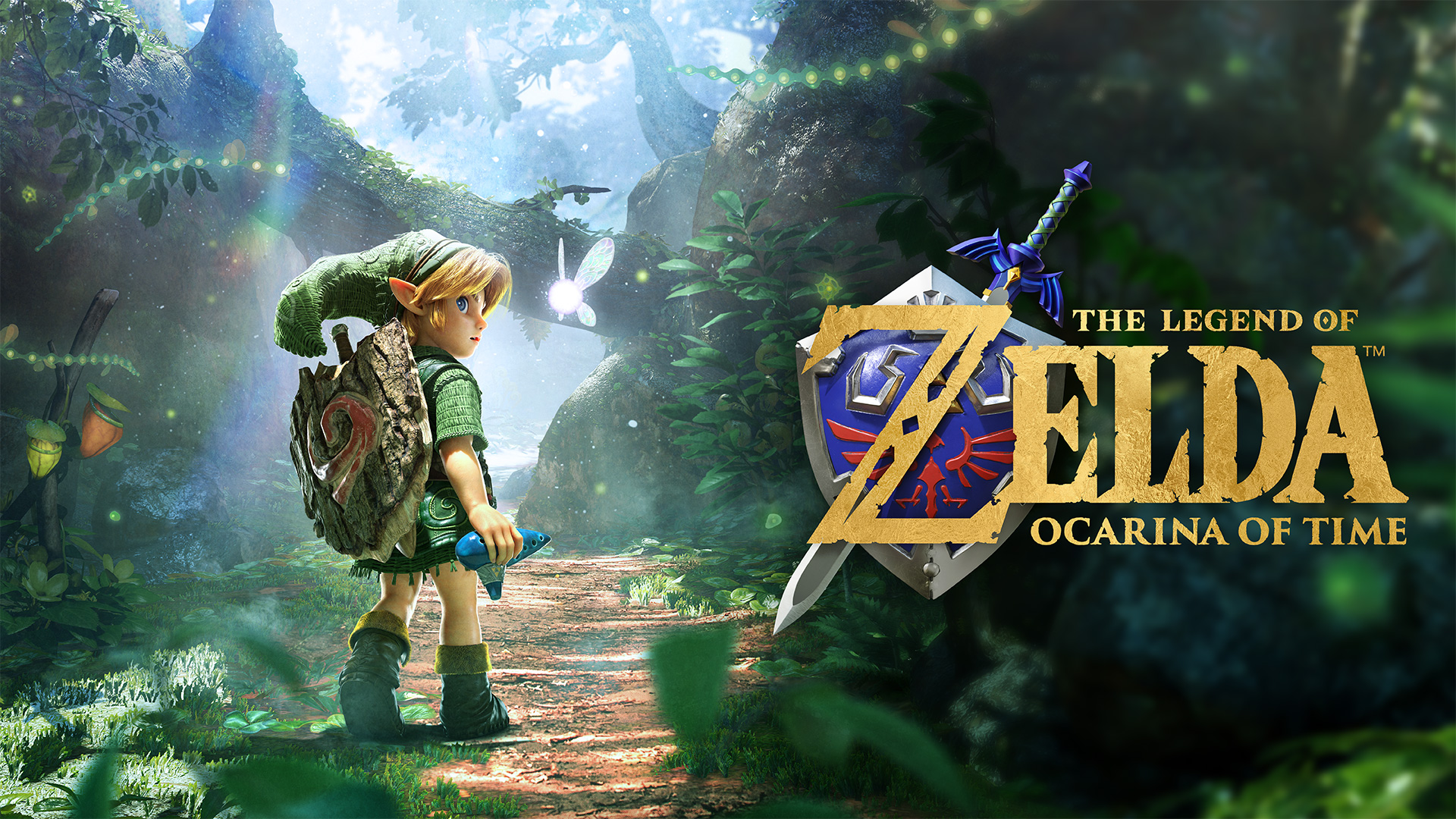
So, remember the first time you pulled the Master Sword out of the pedestal? The light, the music, seven years gone in a flash? If you were a kid in front of an N64 in 1998, you probably even remember exactly where you were sitting.
Nintendo released its full remake of “The Legend of Zelda: Ocarina of Time” for Nintendo Switch 2 on Thursday, Nov. 5, at $59.99. The company first announced it at the end of its June 9 Nintendo Direct.
If you’ve been playing all weekend and feel calmer, happier or just more like yourself, you’re not imagining it. Here’s what’s going on in your head.
Nostalgia isn’t just sentimental. It’s protective.
Nostalgia used to be treated almost like an illness. Today psychologists see it as a mixed emotion, a little bittersweet but mostly warm, and research consistently links it to feeling more connected, more optimistic and more sure of who you are.
Media psychologists Tim Wulf and Nicholas Bowman have studied video game nostalgia specifically. They found that remembering old games made people feel nostalgic, especially memories where they felt good at the game and connected to the people they played with. That nostalgia was tied to feeling more connected to others in the present. [LINK: Wulf et al., Psychology of Popular Media, DOI 10.1037/ppm0000208]
Think about who was on the couch with you. The sibling who couldn’t beat the Water Temple. The friend whose house had the guide book. When you hear the Kokiri Forest theme now, you’re not just remembering a game. You’re remembering them.
Wait, isn’t it just escapism?
A 2025 study in the European Journal of Marketing found that people who feel busy and stressed are drawn to retro games as a way to regulate their emotions. Stressed people reach for familiar comfort, and a familiar game makes life feel more predictable for a while.
Mind you, the Zelda series has its own research track record. A study in JMIR Serious Games looked at “Breath of the Wild” alongside Studio Ghibli films and found that open-world exploration and nostalgic media were linked to a calmer, more positive state of mind, including feelings of purpose and meaning.
The ‘I can do this’ effect
Psychologists who study motivation often point to three basic needs: competence (feeling capable), autonomy (feeling in control of your choices) and relatedness (feeling connected). “Ocarina of Time” hits all three.
- Competence: Every dungeon is a problem you can actually solve. Find the key, light the torches, beat the boss. When work or life feels like a puzzle with no answer, that matters more than it sounds.
- Autonomy: You decide whether to fish, chase Poes or wander Hyrule Field at sunrise. Nobody’s emailing you about it.
- Relatedness: The group chat comparing notes, the kid you’re teaching to play, the online community trading tips. It’s shared.
Getting lost in it, in a good way
Ever look up from a temple and realize two hours went by? That’s flow, the state psychologist Mihaly Csikszentmihalyi described, where a task is hard enough to hold your attention but not so hard it frustrates you. In flow, the anxious background noise in your head quiets down. Good games are built to get you there.
And then there’s the music
Koji Kondo’s score is half the reason this game lives in our memories. Music is one of the strongest triggers for memory and emotion. In this game, it’s literally how you play: you pull out the ocarina and the right song changes the world around you. Saria’s Song, Epona’s Song, the Song of Storms. Be for real, you’re humming one right now.
How to get the good stuff without overdoing it
Large studies of gamers, including Oxford research on actual playtime, suggest that how much you play matters less than why you play. Playing because you enjoy it tends to go with feeling better. Playing because you feel like you have to, or to avoid everything else, doesn’t.
- Play it as a reward, not a hideout. One dungeon after the to-do list is a treat. Six hours to avoid a hard conversation is a dodge.
- Make it social. Play with your kids, your partner or the friend you played with in ’98. That’s where the nostalgia boost really lives.
- Protect your sleep. “One more temple” at 1 a.m. will cost you more tomorrow than the game gave you tonight.
- Don’t speedrun the feeling. Ride around Hyrule Field. Go fishing. The slow parts are often the calming parts.
- Notice how you feel after. Refreshed means it’s working. Drained, guilty or irritable means it’s time for a break.
A video game is a great way to lift your mood. It’s not a treatment. If you’re feeling low most days, or gaming has become the only thing that gets you through, talk to a doctor, a therapist or someone you trust. If you’re in crisis, call or text 988 to reach the 988 Suicide & Crisis Lifeline, any time.
The take
To be honest, there’s a reason this remake landed the way it did. In a year that’s felt loud and heavy for a lot of people, Nintendo gave us a world where every problem has a solution, every song does something and the kid who left Kokiri Forest grows up and saves everybody. That’s not just a game. That’s a little hope you can hold in your hands.
So grab the controller, call your old player two and go home to Hyrule for a bit. You’ve earned it.


Leave a Reply