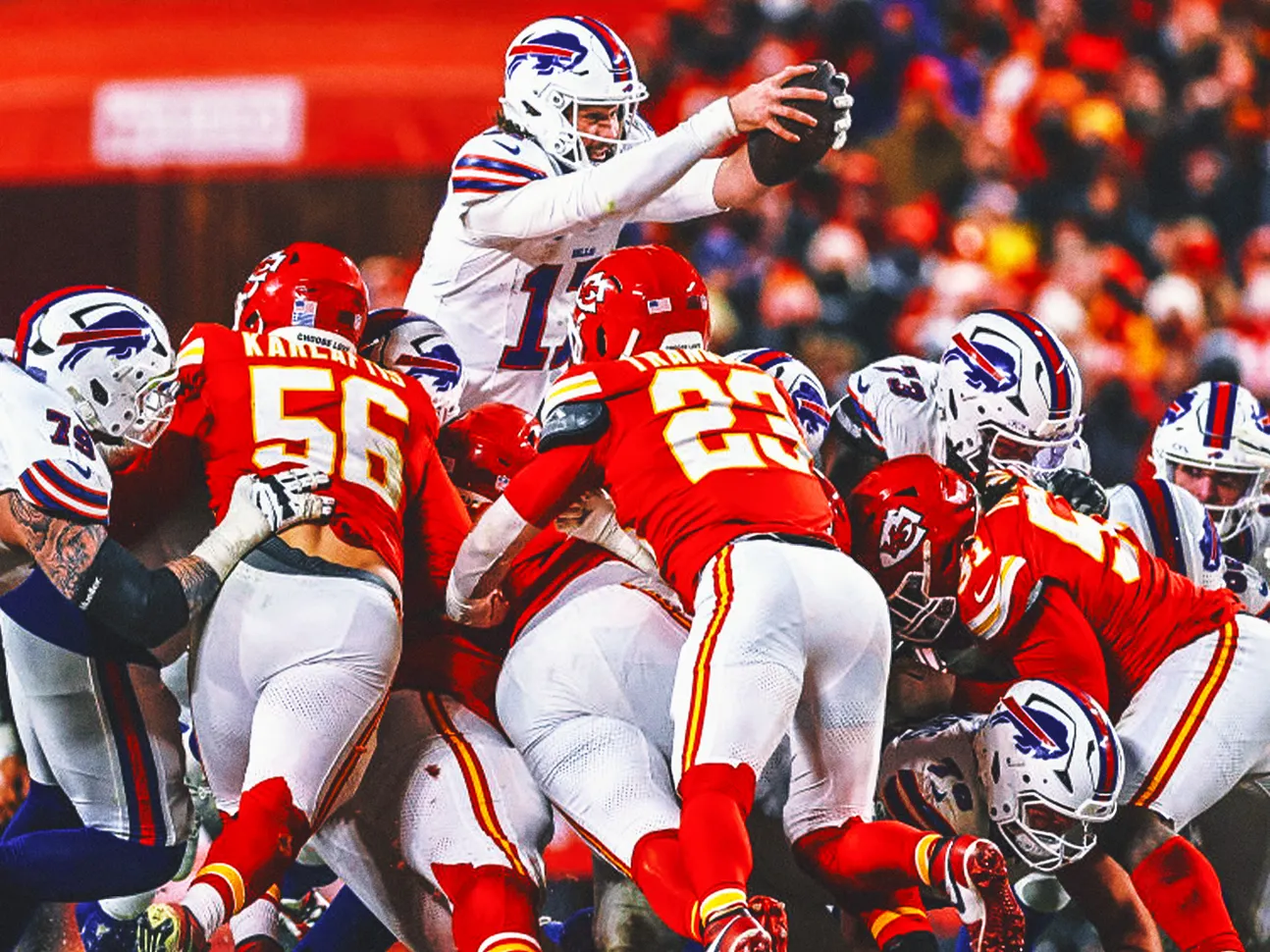
Fourth-and-short, near midfield. The offense jogs off, the punter jogs on, and somewhere in your living room there’s a groan you could hear from the Walt Whitman Bridge.
We’ve all been there. And the numbers say we’re not crazy for groaning. NFL teams have attempted 304 fourth downs through Week 7 this season, the second most ever at that point, according to an Oct. 29 analysis by Ben Volin in The Boston Globe. Ten years ago, in 2016, it was 187. Coaches are going for it more than ever. So why do they still kick when the math says go?
Swap in a controversial Week 11 fourth-down call here as the hook.
In case you forgot where this started
In 2006, Berkeley economist David Romer published a paper in the Journal of Political Economy using play-by-play from the 1998, 1999 and 2000 seasons. He found 1,068 fourth downs where going for it was the better call on average. Teams kicked in 959 of them.
Flip it around and the picture is even starker: in the 1,604 spots where kicking was smarter, teams went for it only nine times. Coaches weren’t making random mistakes. They were consistently too careful.
So, is it getting better?
Yes and no. Volin’s numbers show the seven most aggressive fourth-down seasons on record have all come in the last seven years. That’s real change.
But the conversion rate this year is 53.6%, down from 59% last season. More attempts, fewer successes. That’s the kind of stat that gives a nervous coach an excuse to go back to the punt.
Stay with me now: it’s about blame
Romer himself didn’t fully settle why coaches are so cautious. He floated two ideas: coaches may care about something other than pure win probability, or they may be leaning on gut instinct that’s too conservative.
Smithsonian laid out the career version of that. A coach’s job depends on results, and a lopsided loss after a gamble can look a lot worse to an owner than a close, “respectable” loss. The safe call protects the résumé, even when it hurts the team.
Psychologists have a broader name for this pattern: people tend to judge harm caused by an action more harshly than equal harm caused by doing nothing. It’s sometimes called omission bias. Romer’s paper doesn’t use that term, but it fits. If you go for it and fail, it’s your fault. If you punt and lose, well, that’s football.
Think of it this way: going for it on fourth down is riskier for the coach than a Hail Mary is for the quarterback. Nobody gets fired for a failed Hail Mary.
My take
Here’s where I land: we, the fans, are part of the problem. We scream for aggression until it fails, and then we want the coach fired by Tuesday. Coaches read the room. They chose to punt because we taught them that’s the call nobody gets crucified for.
At the same time, coaches get paid a lot of money to make the right decision, not the popular one. The data has been out there for 20 years. At some point “it felt safer” isn’t a good enough answer.
So here’s my plea: if your coach goes for it, the math backs him, and it fails, give him the same grace you’d give a punt.
Be for real. Nobody remembers the punt.
Leave a Reply